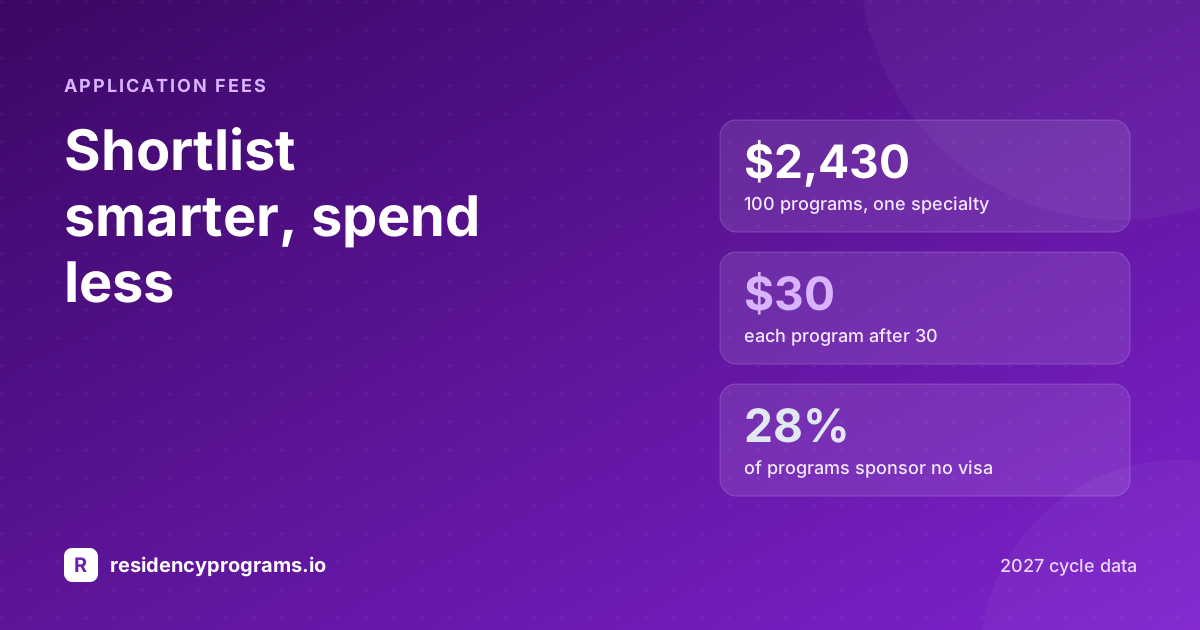
match process How to Shortlist Residency Programs Without Wasting Application Fees ERAS charges $11 per program for the first 30 in a specialty and $30 after that. Here is where application money is usually wasted and a five-step way to build a shortlist that costs less and works better.
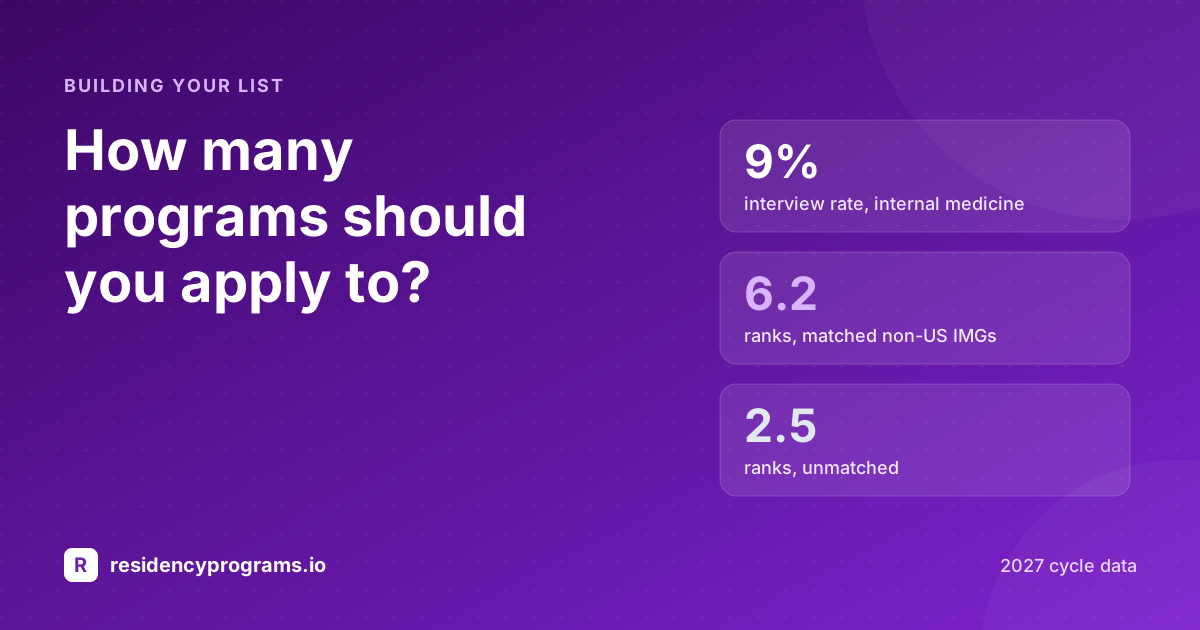
match process How Many Residency Programs Should You Apply To? A Method for IMGs Work backwards from interviews: matched IMGs ranked two to three times as many programs as unmatched IMGs, and interview rates range from 9% in internal medicine to 27% in pediatrics. Here is how to size your list.
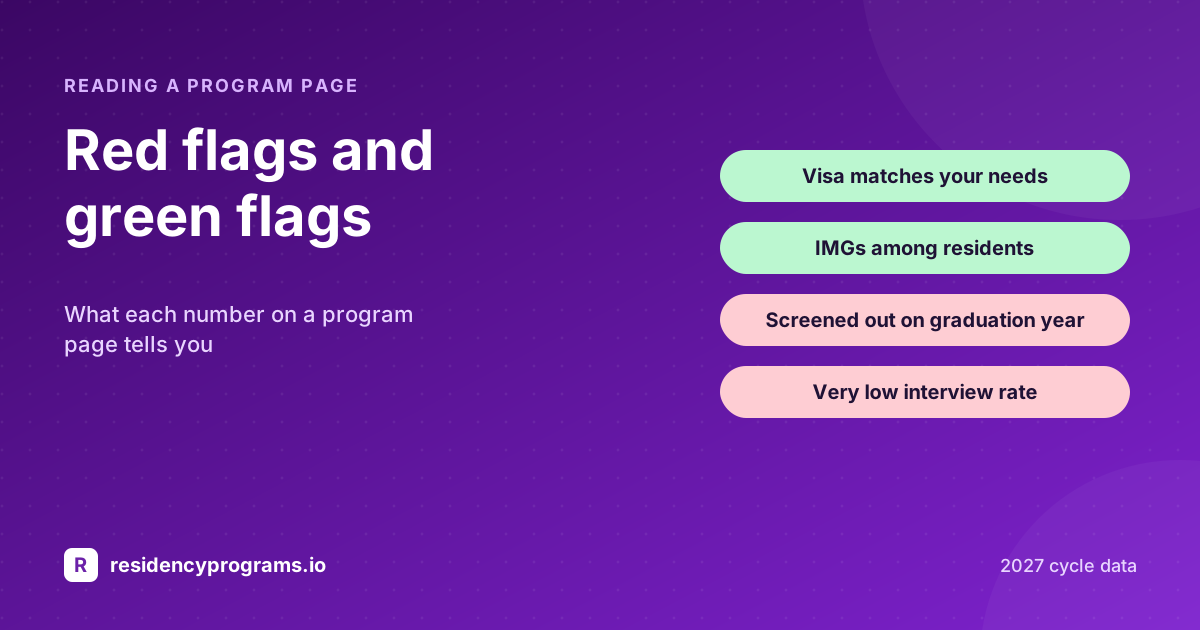
residency programs Red Flags and Green Flags on a Residency Program Page What each number on a residency program page tells an IMG: visa sponsorship, IMG residents, requirements, interview rate and more, with the green flags to look for and the red flags that should make you skip a program.
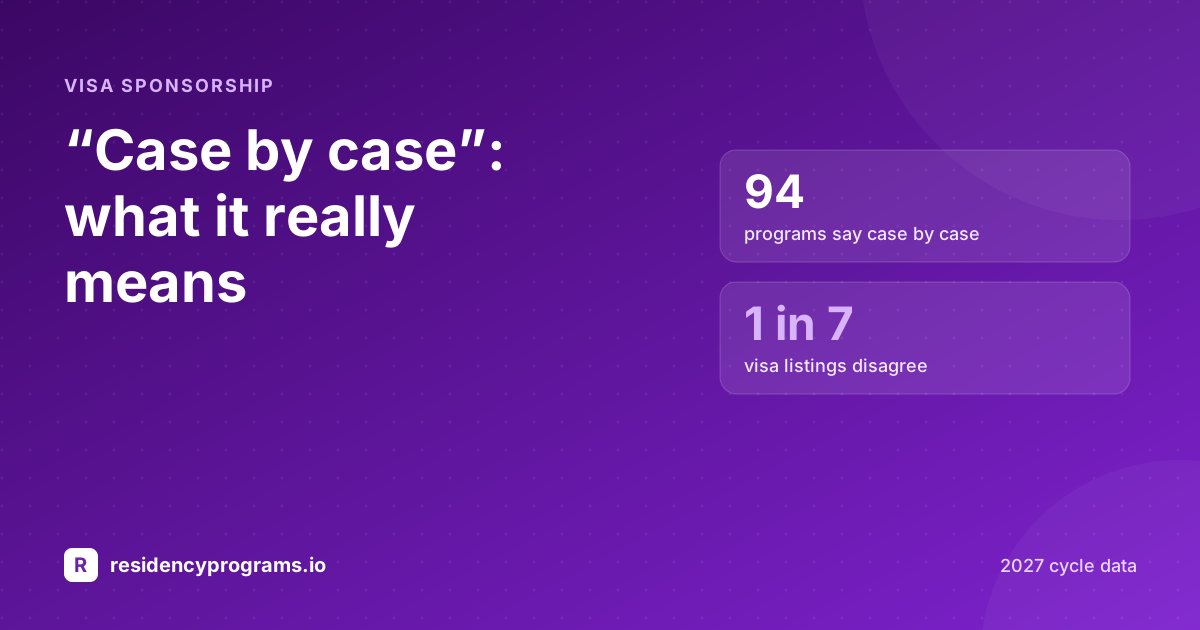
residency programs What "Visa Sponsorship: Case by Case" Really Means for Residency We read the visa notes of 2,924 residency programs. Here are the four things "case by case" usually means, the conditions attached to the H-1B, why visa listings disagree and three questions that get a straight answer.
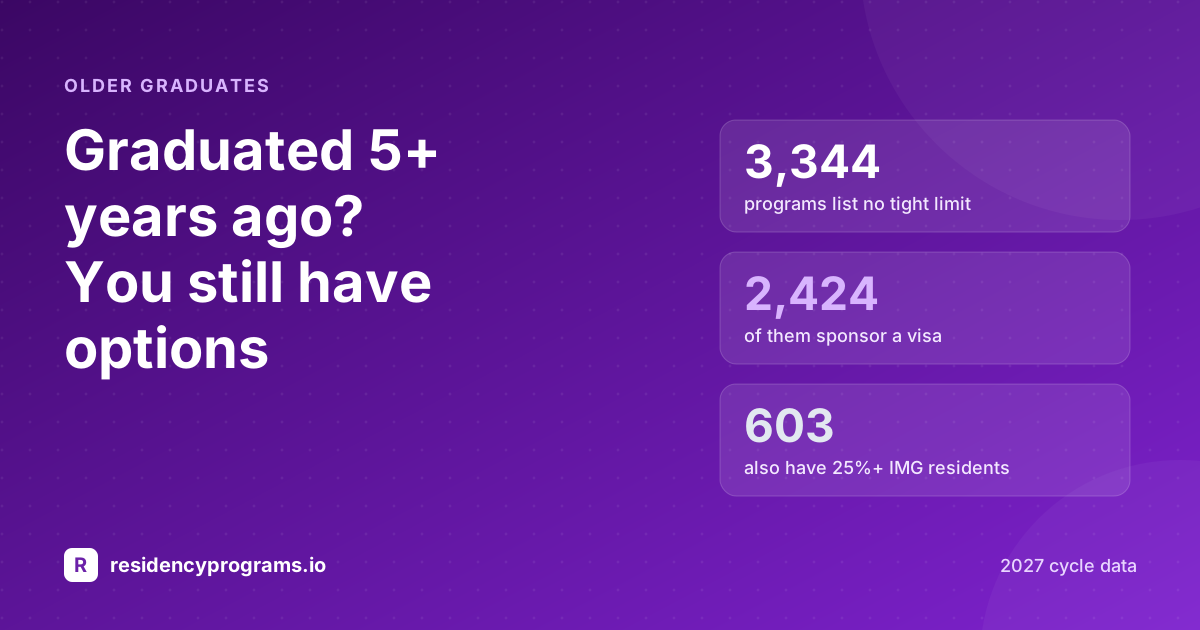
residency programs Residency Programs That Accept Graduates With a Gap of 5+ Years 61% of US residency programs list no graduation limit or accept a gap of more than five years. Here is how many also sponsor visas and train IMGs, by specialty and state, and how to make a long gap work.
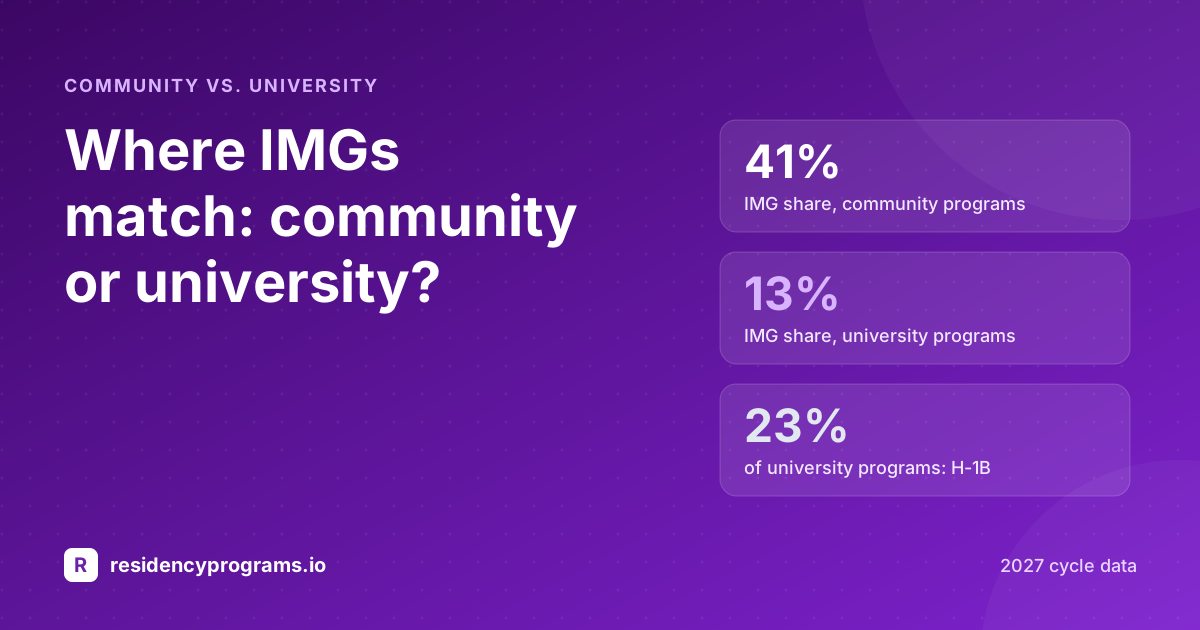
residency programs Community vs. University Residency Programs: Where IMGs Match Community programs have three times the IMG share of university programs, but university programs sponsor visas more often and get fewer applicants per position. Here is how the three types of program compare.
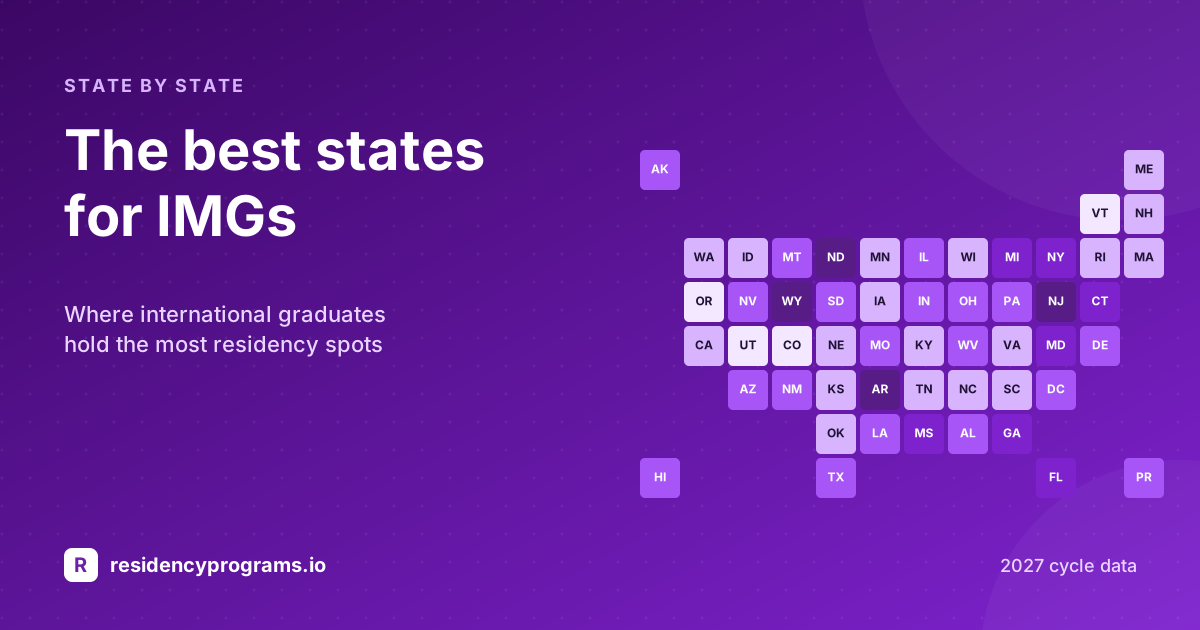
residency programs The Best States for IMGs: Where International Graduates Train About one in four US residency positions goes to an IMG, but the share runs from 4% in Vermont to 48% in North Dakota. Here is where international graduates train, state by state.
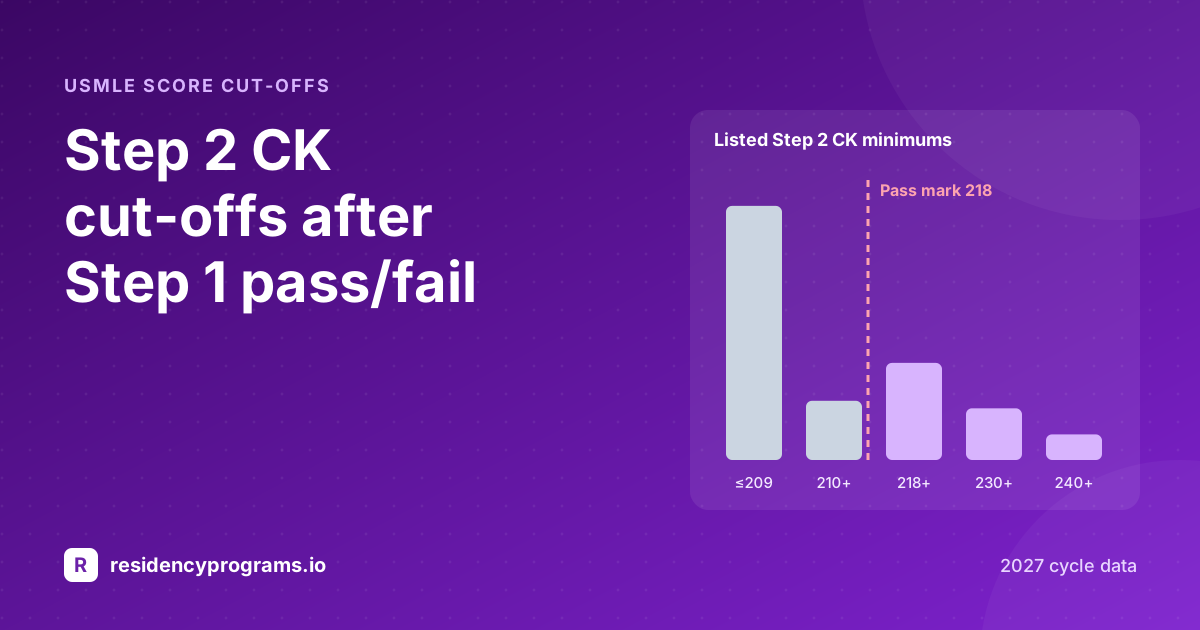
match process Step 2 CK Score Cut-offs for Residency, Now That Step 1 Is Pass/Fail 4,877 residency programs list a minimum Step 2 CK score, but most of those minimums are below today's pass mark. Here is what programs ask for, and what the applicants who get interviews actually score.
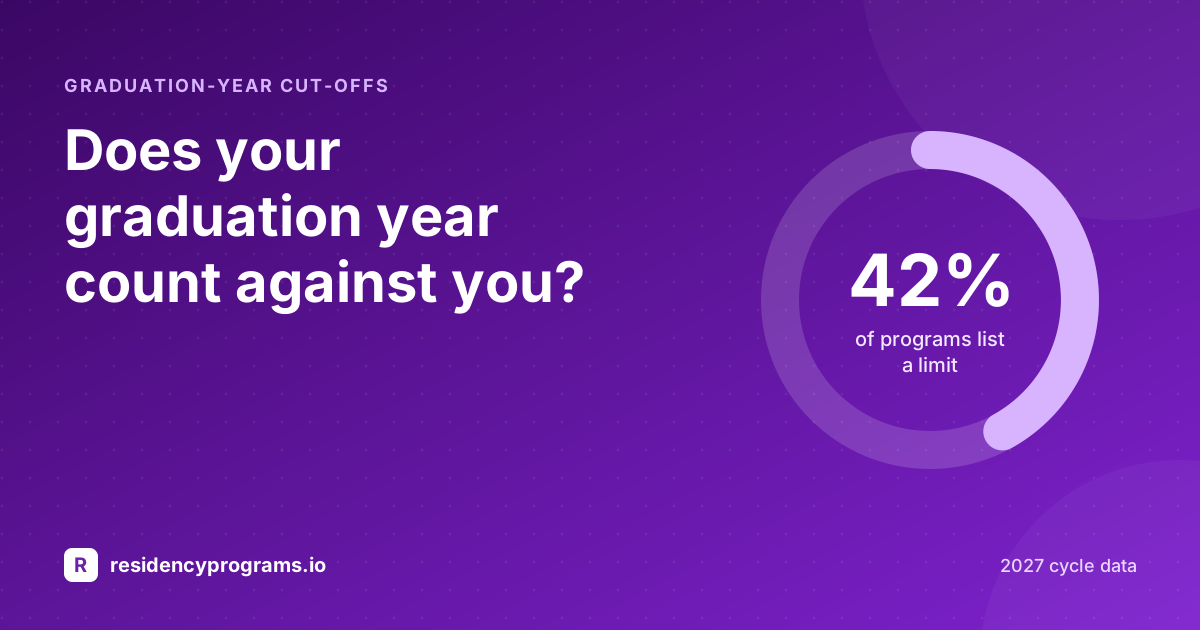
residency programs Year of Graduation Cut-offs: How Many Residency Programs Limit Time Since Med School? 42% of US residency programs list a maximum time since medical school graduation. We looked at which specialties set these limits, how strict they are and where older graduates still have options.
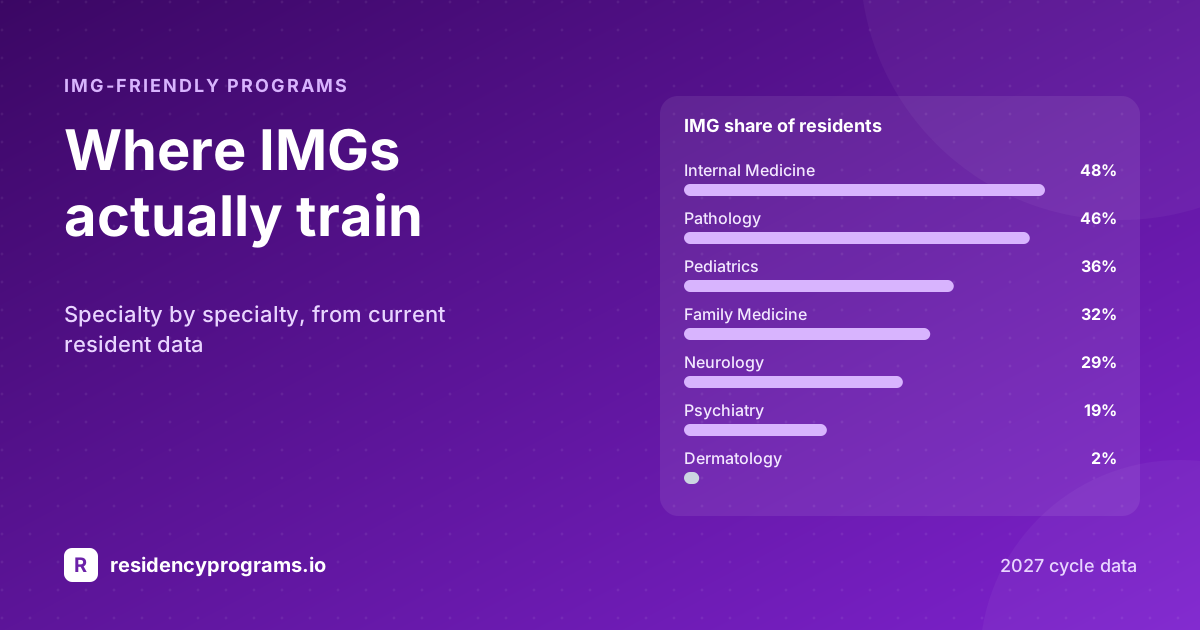
residency programs The Most IMG-Friendly Residency Programs by Specialty (2027 Data) Which specialties and programs train the most international medical graduates? We ranked 5,525 programs by the share of current residents who are IMGs.
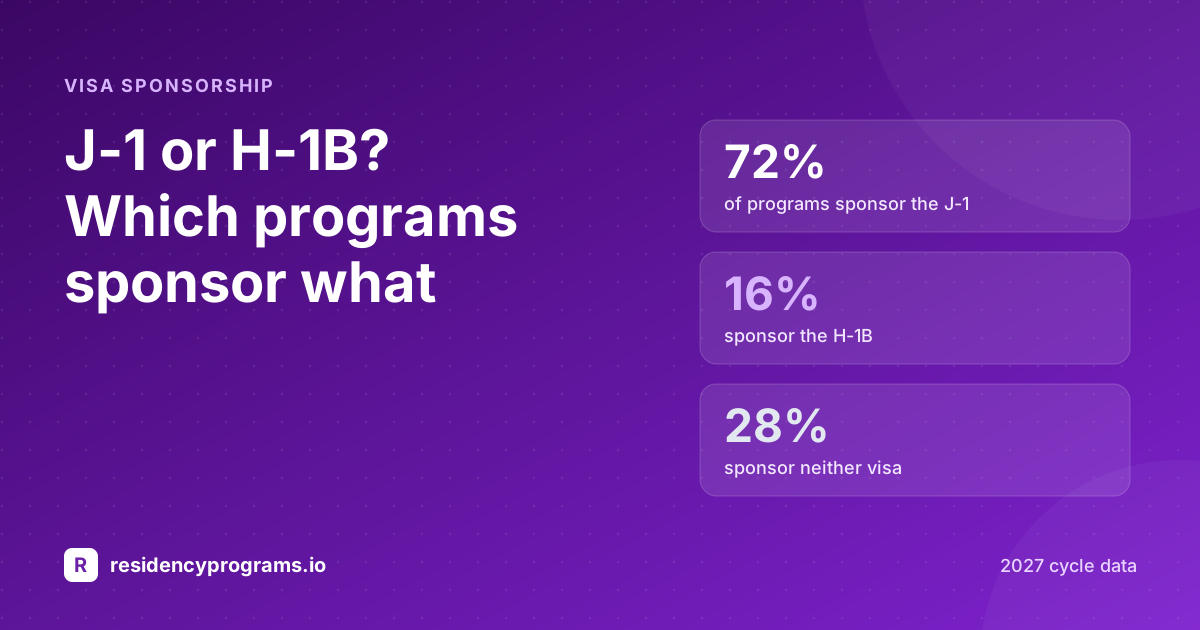
residency programs Which Residency Programs Sponsor H-1B vs. J-1 Visas? Data by Specialty We checked the visa policy of 5,900 US residency programs. 72% sponsor the J-1, 16% sponsor the H-1B and 28% sponsor neither. Here is how that breaks down by specialty, state and type of program.
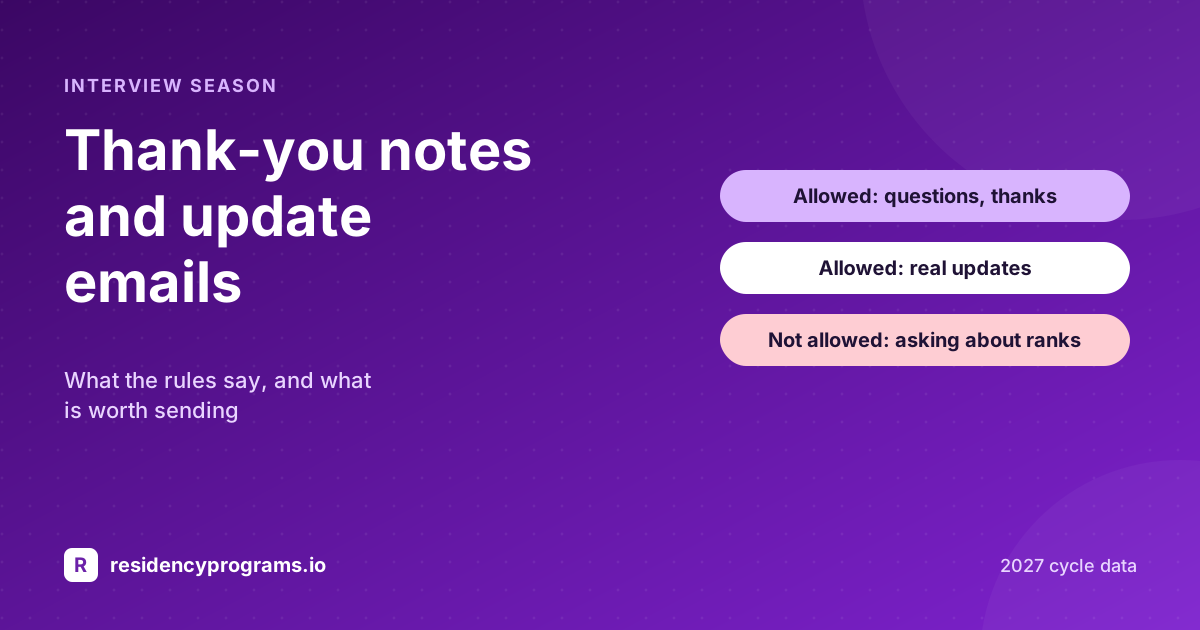
match process Residency Thank-You Notes and Interview Emails: What the Rules Say What NRMP rules allow before and after residency interviews, whether thank-you notes matter, when to send an update email or a letter of intent, and templates you can adapt.
match process ERAS 2027 Applicant Numbers: What We Can Say So Far What the first ERAS 2027 applicant numbers show, what is only a snapshot and what not to conclude from it.
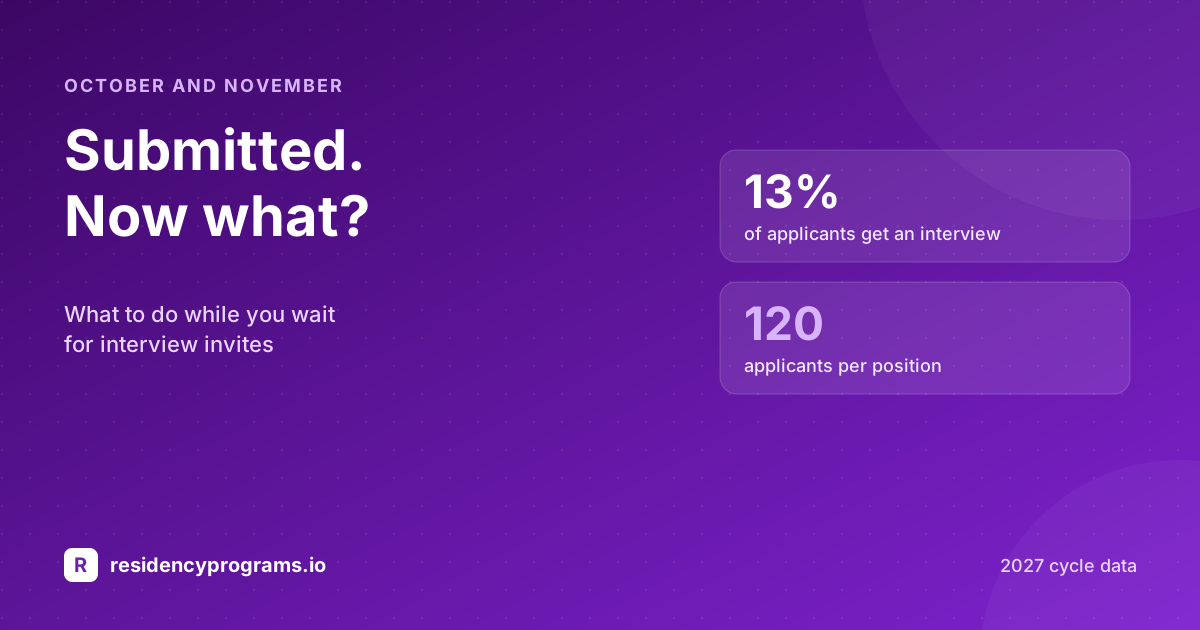
match process What to Do Between ERAS Submission and Interview Invites Programs started reviewing applications on September 23 and interview about 13% of applicants. Here is what is normal in October and November, six things to do while you wait, and when to change course.
match process Do Residency Program Signals Get You Interviews? What the AAMC's 2026 data says about interview rates with and without a program signal, for MD, DO and IMG applicants, and where the numbers should not be over-read.
match process All About Medical Residency and Fellowship Programs in the USA Medical residency and fellowship programs offer opportunity for specialized training in the US. Medical residency spans between 3-7 years depending on chosen specialty, providing hands-on experience to equip healthcare professionals with requisite skills and knowledge necessary to operate autonomously. Becoming eligible for residency programs is no easy feat