

What to Do Between ERAS Submission and Interview Invites
Programs started reviewing applications on September 23 and interview about 13% of applicants. Here is what is normal in October and November, six things to do while you wait, and when to change course.
- Programs started reviewing 2027 applications on September 23, 2026. Most interview invites go out between October and January, and many programs keep inviting into December.
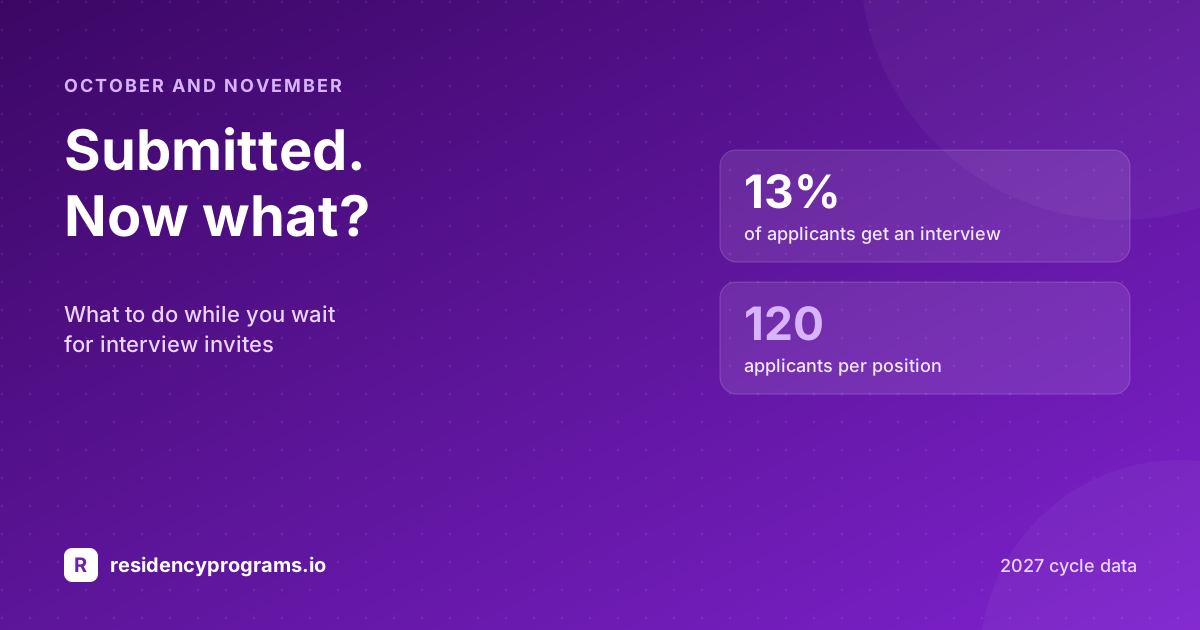
- Silence in October is normal. Across programs that report it, about 13% of applicants get an interview, and there are about 120 applicants per position.
- Use the wait: register for the NRMP (deadline January 29), check your documents, set up fast replies to invites and prepare for virtual interviews (75% of programs report them).
- Send short update emails only when you have real news: a new score, a publication, a new US clinical experience.
- If invites are slow by mid-November, add programs where you are a strong fit rather than more of the same.
You pressed submit in September. Your application is complete, your letters are in, your fees are paid. And now nothing happens. For most applicants, October is the hardest month of the Match: there is little to do, little news, and a group chat full of people posting their invites.
This guide covers what is normal, what is worth doing now, and when to change course.
Where you are in the 2027 Match
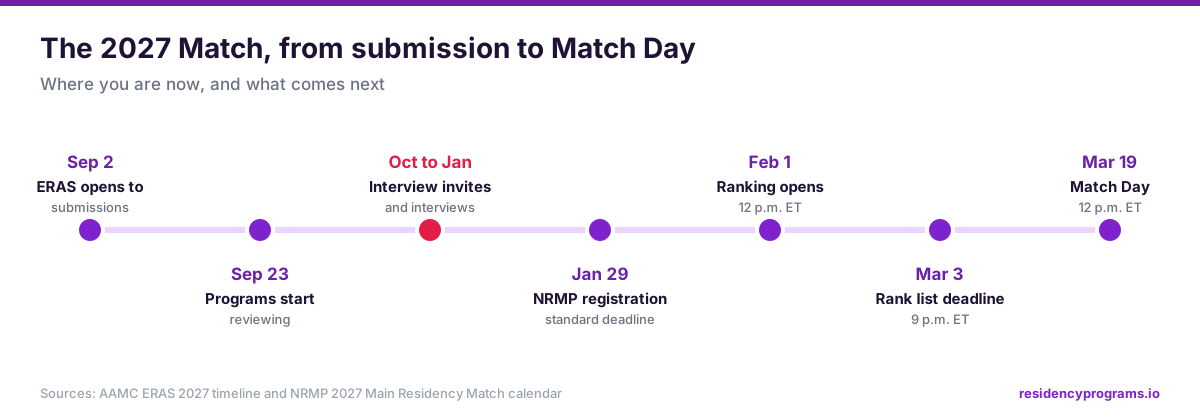
ERAS opened to submissions on September 2, 2026, and programs could start reviewing applications on September 23. Since then, programs have been screening, holding selection meetings and sending invites in waves. Some send most of their invites in the first two weeks. Others invite slowly through November and December, or wait for a later batch of letters or scores.
The key dates still ahead are in the NRMP 2027 applicant calendar: the standard registration deadline on January 29, ranking from February 1, the rank order list deadline on March 3 at 9 p.m. Eastern, and Match Day on March 19.
Why the silence is normal
Programs receive far more applications than they can interview. In the ResidencyPrograms.io database for the 2027 cycle, programs report about 120 applicants for every position, and on average they interview about 13% of the people who apply. In internal medicine, the largest specialty, the figure is about 9%.
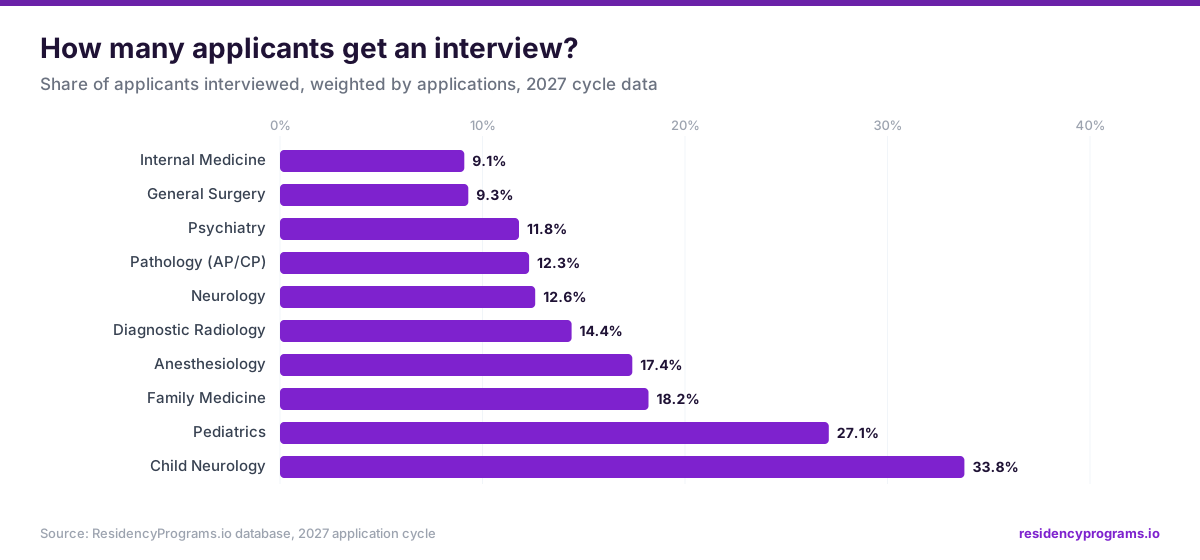
At those rates, even a strong applicant hears nothing from most programs. Silence from a single program in October tells you very little. What matters is the total over the season, which is why a long list is normal in IMG-heavy specialties. Programs where most residents are IMGs are the most crowded: they report about 194 applicants per position and interview about 12% of them.
Six things to do now
1. Register for the NRMP
Applying through ERAS does not enter you in the Match. NRMP registration is separate. It opened on September 15, and the standard deadline is January 29 at 11:59 p.m. Eastern, with a late fee after that. Programs can only rank applicants who are registered, so do it now rather than in January.
2. Make yourself easy to reach
Popular interview dates fill within hours. Turn on notifications for the email address in your application, check your spam folder daily, and keep the interview scheduling platforms your programs use open on your phone. If you are in a different time zone, set alerts for US business hours. A slow reply can cost you a slot.
3. Check that your documents arrived
Open your ERAS account and confirm that every letter, your MSPE, your transcript and your score report show as received by your programs. A missing letter can keep your application from being reviewed at all. If you took a new exam after you submitted, make sure the new result reaches your programs.
4. Prepare for virtual interviews
About 75% of programs in our database report holding interviews remotely. Test your camera, microphone and internet connection, set up a quiet space with a plain background and good light, and run a practice interview on the platform. Prepare two-minute answers about your path, your gap if you have one, and why this specialty.
5. Plan your exams around your visa
If you need the H-1B, many programs that offer it want a passed Step 3 before they finalize their rank list, and some set a date in January or early February. If you have not taken Step 3, plan for it now. Also make sure you will meet ECFMG's requirements in time: the NRMP deadline for IMGs to meet ECFMG verification requirements is the same as the rank list deadline, March 3.
6. Keep your clinical work going
If you are doing US clinical experience, research or clinical work at home, keep at it. It gives you something current to talk about in interviews, and a real update to send programs.
Should you email programs?
A short update email can help if it carries real news. Good reasons to write:
- A new exam score (for example a Step 2 CK or Step 3 result that came out after you applied).
- A new publication, presentation or award.
- A new US clinical experience, or a letter from it.
- A genuine and specific reason to train at that program, such as family in the area, if it is not already in your application.
Keep it to a few lines, address the program coordinator or director by name, include your AAMC ID, and send it once. Do not send weekly "I am still very interested" emails. Programs get hundreds of them, and they do not change screening decisions.
When to change course
There is no fixed rule, but a common checkpoint is mid to late November. If you have very few invites by then, look at your list rather than adding more of the same:
- Check the filters. Are you past the graduation-year limit, below a score minimum or outside the visa policy at many of your programs? Those programs were never going to invite you.
- Add programs where you fit. You can apply to more programs during the season. Add programs that sponsor your visa, accept your graduation year and already train IMGs. Our specialty pages show the IMG share and visa policy of every program, and the ResidencyPrograms.io dashboard ranks programs by how well they fit your profile.
- Consider a second specialty or preliminary positions, if you would be happy to train in them.
Late applications are read less often than early ones, so add programs as soon as you decide, not in January. And if you are wondering whether signals made a difference, our analysis of program signals and interview rates shows how much more often signaled applicants were interviewed.
Look after yourself
The waiting period is stressful, and comparing yourself to others on social media makes it worse. People post invites, not rejections. Set times to check email instead of refreshing all day, keep a simple log of invites and dates, and talk to people who have been through it. Most matched residents remember this month as the hardest part of the process. It passes.
About the data
Dates come from the AAMC's 2027 ERAS timeline and the NRMP's 2027 Main Residency Match calendar. Interview rates, applicants per position and virtual interview figures come from the ResidencyPrograms.io database for the 2027 application cycle, as reported by programs. The 13% overall rate is weighted by the number of applicants, so large programs count more. Your own rate depends on your profile and your list.