

SOAP Survival Guide: What to Do If You Do Not Match (2027)
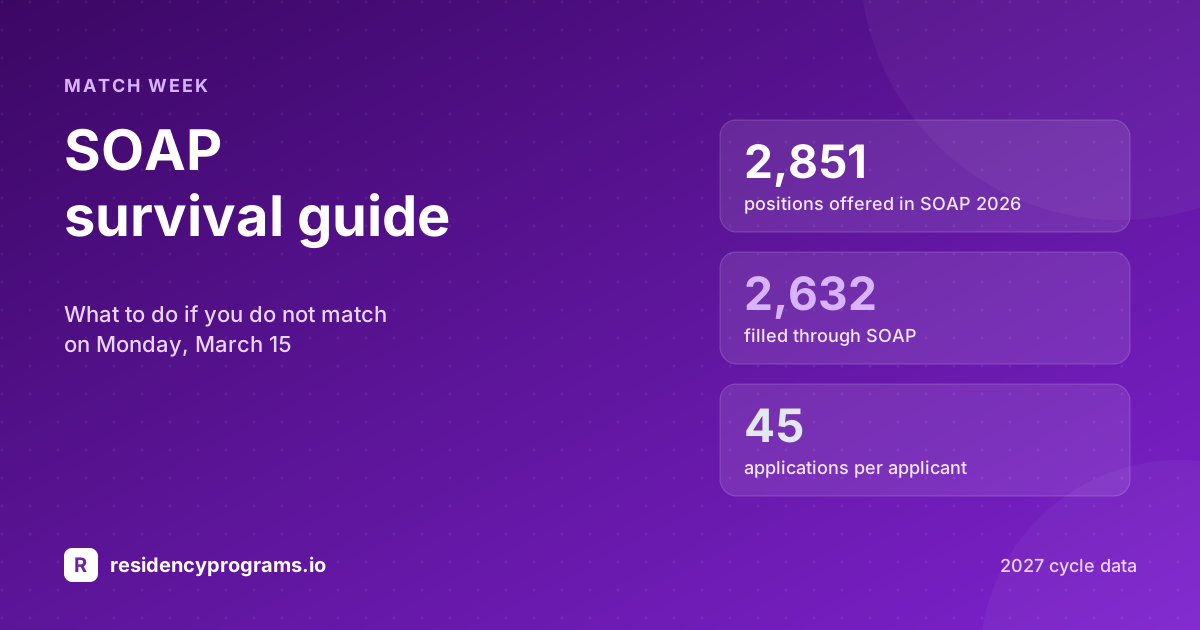
In 2026, 2,851 residency positions went into SOAP and 2,632 were filled. Here is how SOAP works, the 2027 Match Week schedule, the rules that trip people up and how to prepare in February.
- SOAP is the Supplemental Offer and Acceptance Program: the way unfilled residency positions are offered during Match Week to applicants who did not match.
- For 2027, you learn whether you matched on Monday, March 15, at 10 a.m. Eastern. Offers come in four rounds on Thursday, March 18, at 9 a.m., 12 p.m., 3 p.m. and 6 p.m. Eastern.
- In 2026, 2,851 positions went into SOAP and 2,632 were filled. Most come from family medicine, internal medicine (including preliminary years), pediatrics and psychiatry.
- In recent cycles you could apply to 45 programs in total, and you may not contact a program until it contacts you. An accepted offer is binding.
- Prepare before Match Week: documents, a target list and a plan for Monday afternoon.
Nobody plans to SOAP. But every year thousands of applicants open the NRMP's Monday email and learn that they did not match, or matched only to an advanced position without a first year. For them, the next four days decide whether they start residency in July or wait another year.
The applicants who do best in SOAP are the ones who prepared for it in February, when it still felt unnecessary. This guide covers how it works and what to do, hour by hour.
How SOAP works
After the Match algorithm runs, some positions are left unfilled. Programs that take part in SOAP offer those positions to eligible unmatched applicants during Match Week. You apply through ERAS (or ResidencyCAS for emergency medicine and obstetrics and gynecology), programs review and interview by phone or video, and then they make offers through the NRMP's R3 system in four timed rounds.
The scale is significant. In the NRMP's 2026 Main Match report, 2,851 positions were offered through SOAP and 2,632 of them were filled. Family medicine's fill rate rose to 98.6% after SOAP, and psychiatry's to 97.4%.
To take part, you must be registered for the Match, eligible to start training on July 1, and either fully unmatched or partially matched. For IMGs that means meeting ECFMG's requirements by the NRMP deadline.
The 2027 Match Week, hour by hour
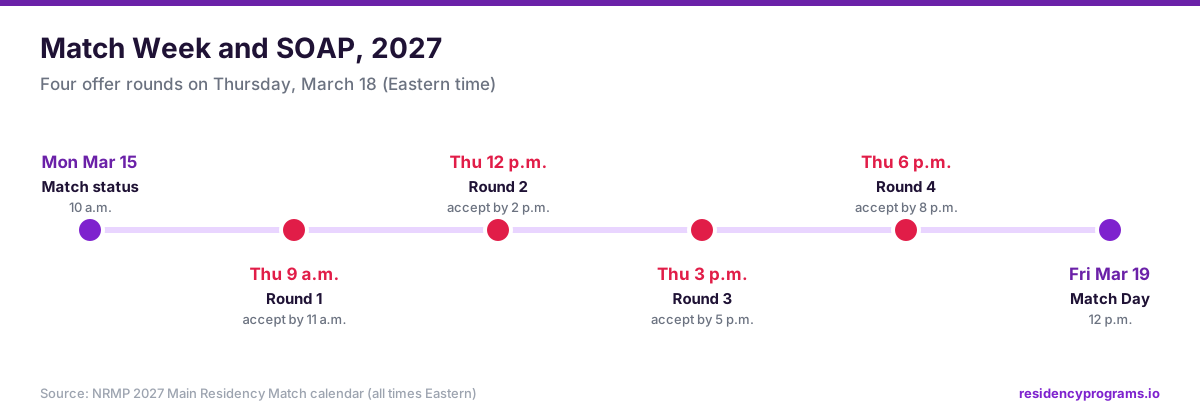
| When (Eastern) | What happens |
|---|---|
| Mon, March 15, 10 a.m. | You learn whether you matched (not where) |
| Mon, March 15, 11 a.m. | SOAP begins: the list of unfilled programs opens in R3 |
| Mon to Wed | Applications go out (check the calendar for the exact opening time); programs review and interview |
| Thu, March 18, 9 a.m. | Round 1 offers (accept by 11 a.m.) |
| Thu, March 18, 12 p.m. | Round 2 offers (accept by 2 p.m.) |
| Thu, March 18, 3 p.m. | Round 3 offers (accept by 5 p.m.) |
| Thu, March 18, 6 p.m. | Round 4 offers (accept by 8 p.m.) |
| Fri, March 19, 12 p.m. | Match Day |
Check the exact times on the NRMP applicant calendar before Match Week. The SOAP rules are published each year and can change.
The rules that trip people up
- A limited number of applications. In recent cycles, each applicant could send up to 45 applications during SOAP, and applications already sent to those programs during the regular season counted toward the total. You cannot withdraw an application once it is sent. Choose carefully.
- No contact first. You, your school, your mentors and anyone acting for you may not contact a SOAP program until the program contacts you. Breaking this rule can lead to an NRMP investigation and a bar from future SOAPs.
- Offers are binding. If you accept an offer in R3, you are committed to that program, just like a match. Accept only offers you will take.
- Only one acceptance. You may receive several offers in a round but can accept only one. Once you accept, you are out of SOAP.
- Positions only, not specialties of your choice. You can only apply to programs that are on the list of unfilled programs and for which you are eligible. Partially matched applicants can apply only to the type of position they still need.
Where SOAP positions come from
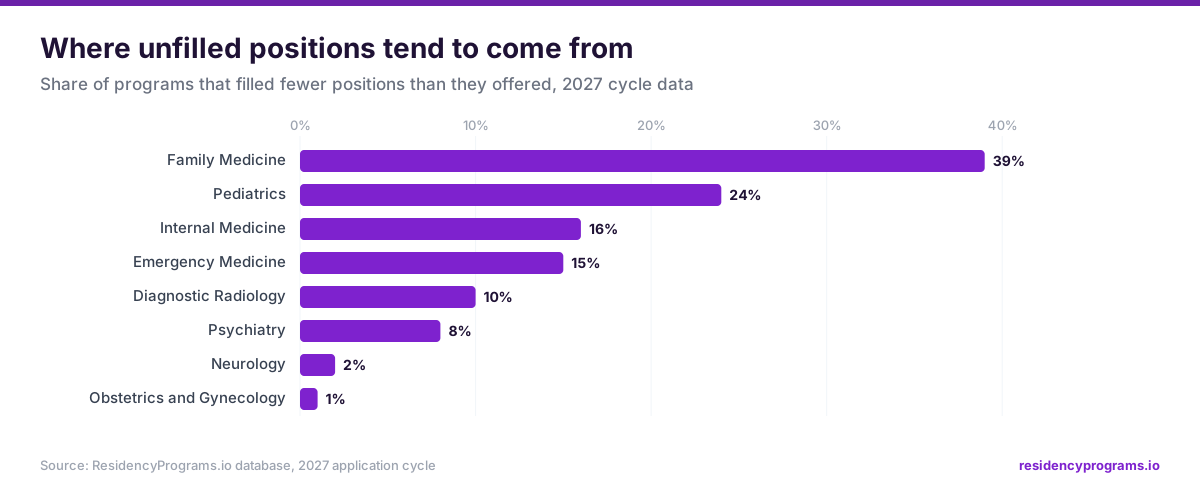
In the data programs report for the 2027 cycle, 39% of family medicine programs filled fewer positions than they offered, followed by pediatrics (24%), internal medicine (16%) and emergency medicine (15%). Neurology, obstetrics and gynecology and the surgical specialties almost always fill. Preliminary internal medicine and surgery years and transitional years also appear in SOAP every year.
That gives a realistic picture of a SOAP list. If you applied to a competitive specialty and did not match, most of your SOAP options will be in other specialties. Decide in advance which ones you would truly accept, because you will not have time to think it through on Monday. Our family medicine and internal medicine pages list every program with its IMG share and visa policy, which helps you sort SOAP programs quickly.
Prepare in February
- Write a SOAP personal statement for each specialty you would accept. A statement written for dermatology will not work for a family medicine program.
- Line up letters. Ask a mentor in a SOAP-friendly specialty for a letter you can assign if needed.
- Make a short list in advance of programs by specialty that sponsor your visa, accept your graduation year and have taken IMGs. You will not know which have openings until Monday, but you will be able to match the unfilled list against it in minutes.
- Clear Match Week. Take the week off from work or rotations. Keep your phone charged and your video setup ready for short-notice interviews.
- Name an adviser. Your school's dean's office or an experienced mentor can help you decide fast. Agree with them in advance how you will reach each other on Monday.
If you are in SOAP: Monday to Thursday
- Monday morning: read your status, take a breath, then open the unfilled list as soon as it is available. Filter by eligibility and visa first.
- As soon as applications open: send your strongest applications first. Programs start reviewing right away.
- Tuesday and Wednesday: answer every call and email quickly. SOAP interviews are short, often 10 to 20 minutes. Be ready to explain why you want that specialty and that program.
- Thursday: stay by your device for all four rounds. If you get an offer you want, accept it. Waiting for a better round is a gamble that usually loses.
If you do not get a position
Some positions remain after SOAP (219 in 2026), and programs fill them directly after Match Week. Keep checking. If nothing comes, the next cycle starts sooner than it feels: improve the weakest part of your application, add recent US clinical experience, and build a list based on fit rather than hope. The ResidencyPrograms.io dashboard shows which programs fit your profile and which ones screen you out.
About the data
Match Week dates come from the NRMP's 2027 Main Residency Match calendar. SOAP results for 2026 come from the NRMP's Results and Data report. Rules described here are those of recent cycles; the NRMP and AAMC publish the SOAP rules for each year, so confirm them before Match Week. The share of programs that filled fewer positions than offered comes from the ResidencyPrograms.io database for the 2027 cycle, as reported by programs, for specialties with at least 80 programs.